We are at your service 24/7
We have agreements with private insurance

Knee Replacement Operation With Robotic Surgery

KNEE REPLACEMENT OPERATION WITH ROBOTIC SURGERY
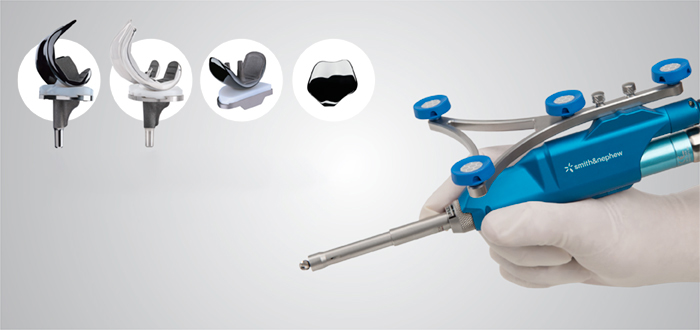
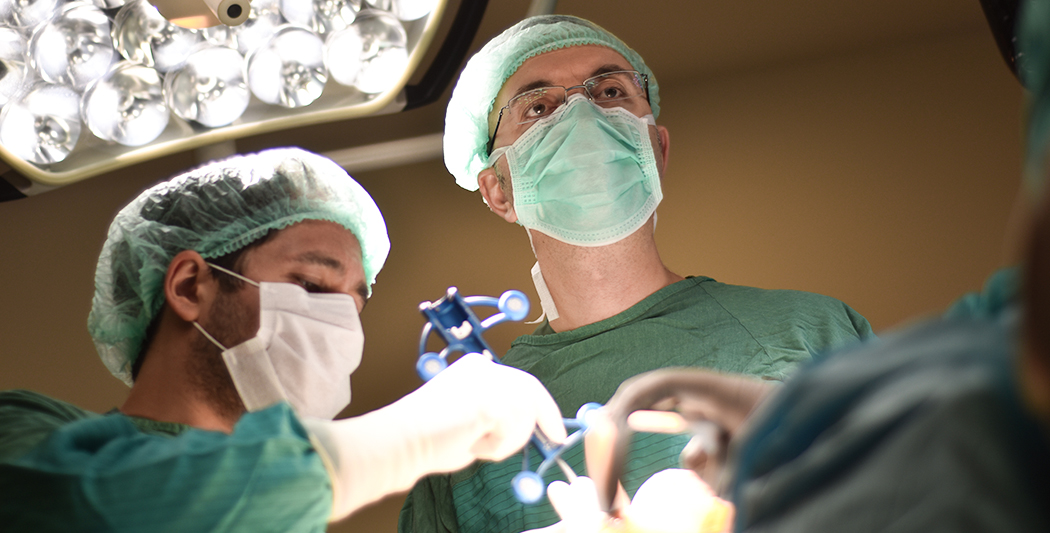
The New Generation Robotic Surgery System provides significant advantages for the patient and the surgeon in partial and total knee replacement surgeries performed by Orthopedics and Traumatology Specialists.
While the system does not allow a millimetric error in the surgery, it provides a safer operation, at the same time, it provides a faster and painless recovery thanks to its features that protect the full ligaments in the knee and minimize tissue trauma.
Knee replacement with robotic surgery is an advanced technology that has emerged as a result of the combination of advanced medical technology and advanced engineering science, which allows an orthopedics and traumatology specialist to determine the patient’s anatomy and apply implants in the most appropriate and balanced way.
WITH A 3D KNEE MODEL, PLANNING IN ACCORDANCE WITH THE ANATOMICAL DATA OF THE PATIENT
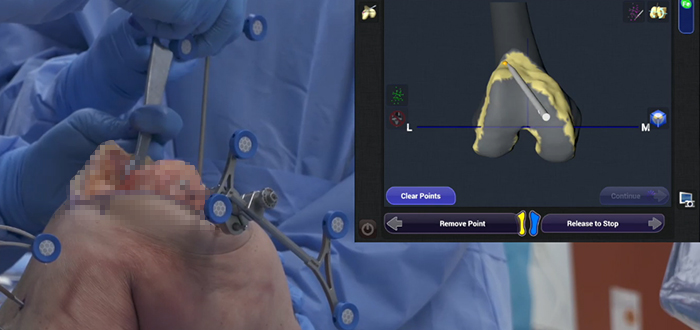
The robotic system almost guides the surgeon physically, visually, and audibly. In this system, the places where the implant will be placed and the movements of the implant are transferred to a computer during the operation. The system creates a 3D knee model with the anatomical data of the knee. The model provides the orthopedic surgeon with the opportunity to plan and perform the operation. In the light of these data, the surgeon places the knee implant in the most appropriate size and angle. In this way, the patient is not exposed to radiation unnecessarily, as there is no need for pre-operative tomography.
THE PATIENT’S TIME TO HEAL AND RETURN TO DAILY LIFE SHORTENS
During the operation, thanks to the robotic system, the compatibility of the implant is tested and evaluated at all bending angles of the knee. Thus, it is ensured that the operation is completed with precision and high accuracy, specific to the patient’s anatomical structure. In this way, the risk of developing mechanical complications in the future is also minimized. While the margin of error is eliminated with the robotic surgery system under the management of the surgeon, the recovery and return to daily life time of the patient after the operation is shortened. On the other hand, the healing process becomes more painless and easier thanks to the pros of the system.
- Creates a 3D Model of the Joint in Surgery without the Requirement of CT
- It helps the surgeon to determine the anatomy of the patient, who will have prosthetic surgery, and to place the implants in the most appropriate and balanced way.
- It provides a safe surgery opportunity by not allowing even a millimetric error.
- Ligaments in the knee are preserved, tissue trauma is reduced to a minimum.
- Being able to return to daily life in a shorter time by providing faster and painless recovery
- Due to the high accuracy of the implants, the life of the prosthesis is long
THE USE OF ROBOTS IN SURGERY
The first use of robots in surgery was in 1985 for the purpose of biopsy in neurosurgical operations. In orthopedic surgeries, robots began to be actively used in 1992. With the development of technology, a new generation of robotic surgery has actively taken an important place, especially in prosthetic surgeries.